Restrictions on Venting and Flaring: An Overview of the Regulatory Requirements
Find out about the upcoming regulations that affect your company.
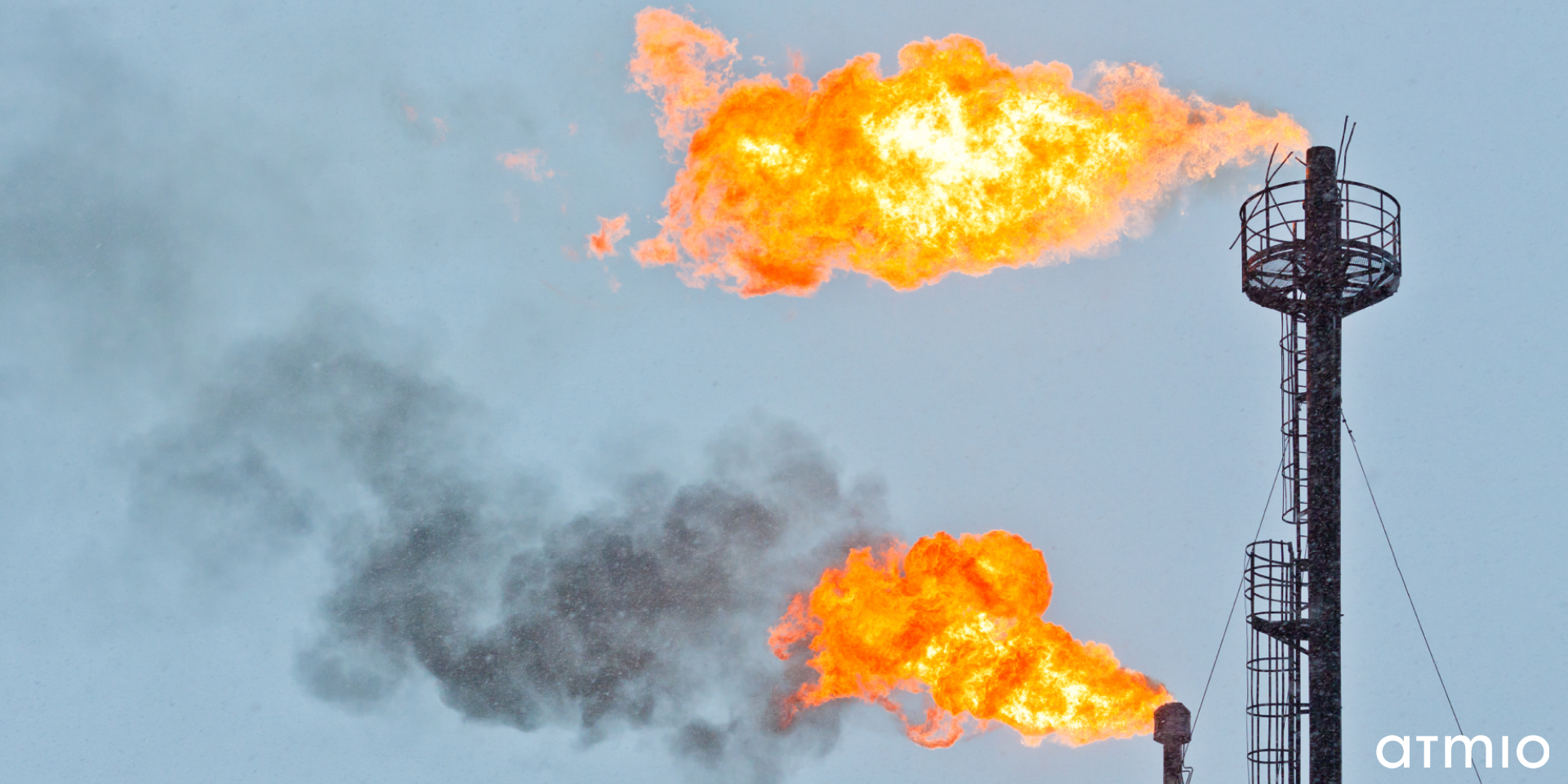
With the growing urgency to reduce methane emissions, regulatory measures restricting venting and flaring are coming into focus. The new EU Methane Regulation aims to significantly reduce methane emissions by clearly defining and regulating how these processes are handled. This article highlights the key requirements and the permitted exceptions.
Precise requirements for venting and flaring
The regulation stipulates that routine venting and flaring are prohibited in principle, with a few defined exceptions (Art. 15(1)). The aim of these measures is to further reduce methane emissions.
Defined exceptions to the rule
Despite the clear requirements, there are specific exceptions that allow operators to continue venting under particular circumstances. These exceptions relate to the following situations:
- During the normal operation of components specifically designed for venting, such as pneumatic devices, compressors or atmospheric-pressure storage tanks (Art. 15(3)(a)).
- To unload liquids from a well or to equalise with atmospheric pressure (Art. 15(3)(b)).
- When gauging or sampling a storage tank or other low-pressure vessel (Art. 15(3)(c)).
- When transferring liquids from a storage tank or low-pressure vessel to a transport vehicle (Art. 15(3)(d)).
- During repairs, maintenance, testing procedures and decommissioning, including purging and depressurising to carry out these activities (Art. 15(3)(e)).
- When carrying out a bradenhead test (Art. 15(3)(f)).
- During a packer leakage test (Art. 15(3)(g)).
- When carrying out a production test lasting less than 24 hours (Art. 15(3)(h)).
- When the methane does not meet the specifications of the gathering line (Art. 15(3)(i)).
- When commissioning pipelines, equipment or facilities (Art. 15(3)(j)).
- When pigging or purging a pipeline for repair, decommissioning or flushing (Art. 15(3)(k)).
These exceptions provide clear guidance, especially for operators who depend on venting during operation or maintenance. At the same time, the goal remains to keep methane emissions as low as possible through controlled measures.
Hierarchy of procedures: re-injection, flaring, venting
One of the central provisions of the regulation is the introduction of a hierarchy of procedures that gives operators clear priorities. At its core is the obligation to re-inject methane or otherwise utilise it as a first priority. Only if this is not possible for technical or safety reasons may companies resort to flaring. Controlled venting is the last resort, which may only be used once all other options have been exhausted (Art. 15(6)), for example when flaring is technically not feasible or a flame cannot be sustained. Both flaring and venting are subject to extensive reporting obligations, which increase transparency as well as the operational workload. A detailed article on reporting for flaring and venting will follow in the coming weeks.
Documentation and transparency as key mechanisms
The reporting obligation is an essential part of the regulation. Companies must fully document all flaring and venting events and submit the corresponding reports. This transparency requirement not only supports environmental protection, but also ensures that uncontrolled emissions are kept to a minimum (Art. 15(4)). With atmio’s all-in-one solution, the necessary documentation and reports can be generated with a single click, reducing the operational workload to a minimum.
Conclusion
The new EU Methane Regulation sets clear standards for dealing with methane emissions in the oil and gas industry. By focusing on restricting routine activities and establishing a clear hierarchy of procedures, the regulation helps to limit emission-intensive practices and encourages companies to carry out existing procedures in a more controlled way. The obligation to comprehensively document methane releases increases operators’ accountability.
Companies now face the challenge of adapting their operational processes to these new requirements and deploying technologies that enable low-emission handling of methane. atmio supports companies in meeting these regulatory challenges by offering tailored solutions that minimise methane emissions and ensure compliance with the applicable rules. Contact us to find out more about how we can help you meet these requirements.
More articles